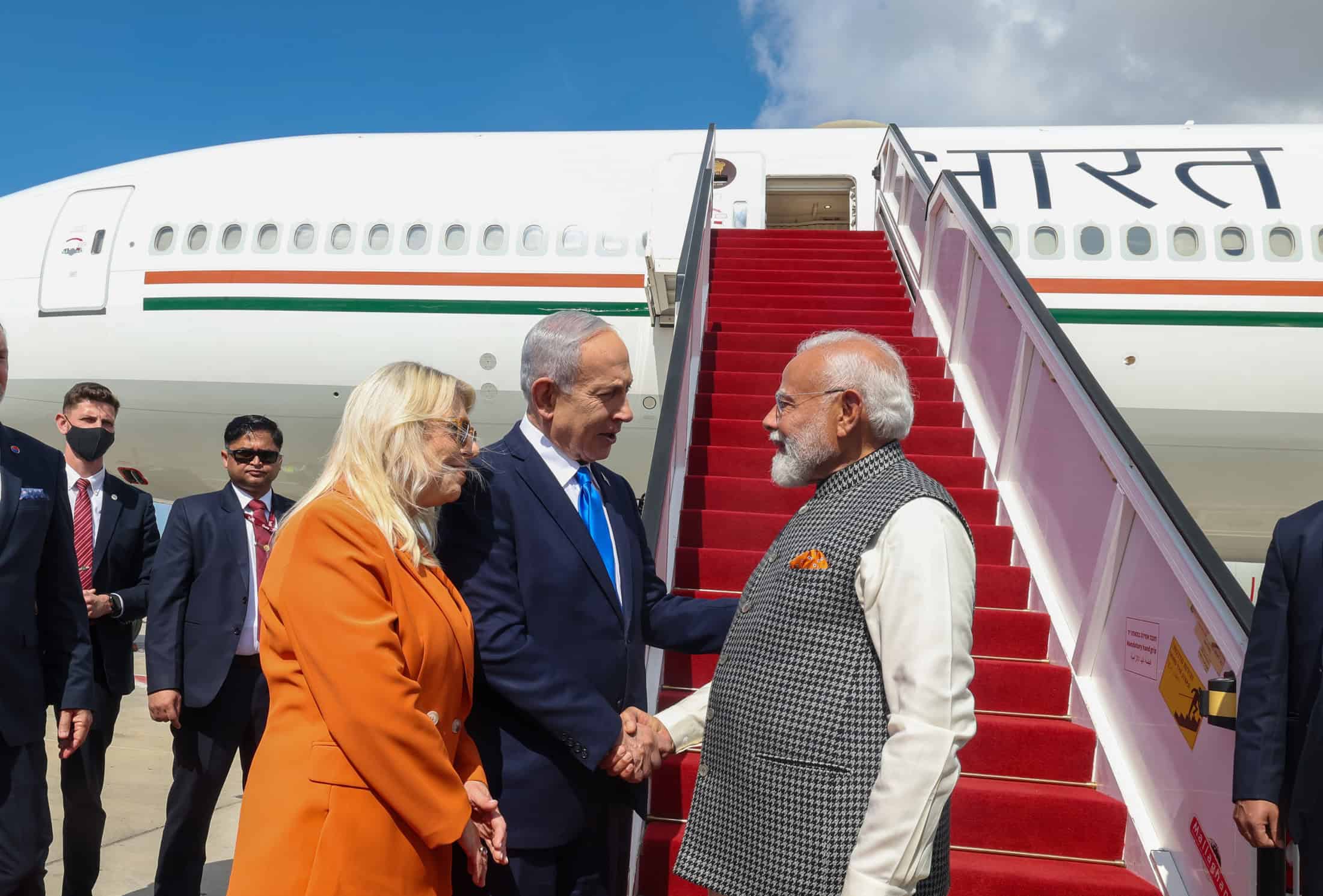
The motorcade rolled into Tel Aviv on the afternoon of 25 February 2026 and for a moment the choreography looked routine. Another leader, another red carpet, another round of handshakes at Ben Gurion. Then Benjamin Netanyahu appeared with his wife Sara at the foot of the aircraft steps, an honour Israel does not extend lightly. It became clear this visit carried more weight than the itinerary let on. By the next evening, Narendra Modi would become the first foreign leader ever awarded the Speaker of the Knesset Medal. Two governments that spent decades treating their defence relationship as something to manage quietly had decided to stop pretending otherwise. It took them two days.
A Friendship That Grew Up in the Shadows
To understand why this visit mattered, it helps to remember how unusual it was that India and Israel became close at all.
Formal diplomatic ties date only to 1992, late by the standards of most major relationships. For years afterward, defence cooperation ran on a separate, quieter track from the public friendship. India needed weapons Russia could not always supply on time. Israel needed customers who would buy without moralising about where its technology came from. Radars, missiles, drones, small arms, all of it flowed steadily even when neither government said much about it in public. Israel became India’s third-largest arms supplier through a relationship that read, for most of its life, as transactional rather than deep.
What changed was not the friendship. It was the ambition sitting underneath it.
Two Wars That Rewrote the Argument
Every serious defence relationship needs a moment that proves the theory and India-Israel ties got two of them in short order.
The first arrived close to home. When fighting broke out with Pakistan in May 2025, India found itself managing a fight fought largely through drones, precision missiles and contested airspace. The experience exposed gaps that planners had discussed for years without quite fixing. The second came from further away. Israel’s own campaigns between 2023 and 2025 put its layered air defence through a test no laboratory could replicate. Iron Dome, David’s Sling, the Arrow interceptors, all of it held up and the performance reset how seriously other militaries took the systems.
Put those two episodes together and the logic writes itself. India had just seen its own vulnerabilities in drones, missiles and cyber warfare. Israel had just proven, in the most literal sense possible, that it built things which worked. A relationship that had spent thirty years selling India equipment was suddenly positioned to sell India confidence.
From Buying Weapons to Building Them
The clearest sign of how far the relationship has travelled sits in a single word: co-production.
On 4 November 2025, defence secretaries from both sides met in Tel Aviv for the seventeenth Joint Working Group on defence cooperation. They signed a memorandum that both governments described, without much exaggeration, as a new policy architecture. The document commits India and Israel to joint development and joint manufacturing rather than the old cycle of tender, purchase and delivery. When Modi and Netanyahu sat down again in February, they folded that MoU into something bigger still: a “Special Strategic Partnership for Peace, Innovation and Prosperity.” Sixteen fresh agreements and eleven joint initiatives followed, 27 outcomes in total. They spanned artificial intelligence, critical and emerging technologies, cybersecurity, water management and defence platforms.
Foreign Secretary Vikram Misri put it plainly to reporters in Jerusalem. The visit, he said, capped a decade of progress and opened the next phase of the relationship. Reported estimates of the defence deals under discussion during the visit ran as high as eight to ten billion dollars. Those figures came from Indian and Israeli media rather than an official tally. The true number will only firm up as individual contracts are signed.
The Sky India Wants to Own
Nowhere does the shift from buyer to builder show more clearly than in the air.
India has expressed interest in all four layers of Israel’s missile shield. The Israel Aerospace Industries Arrow system handles exo-atmospheric intercepts. Rafael’s David’s Sling covers the medium tier. The now-famous Iron Dome stops short-range rockets and drones. Iron Beam, the laser weapon Rafael and Elbit are fielding, offers a cheaper answer to swarms of cheap threats. None of this arrives as a replacement for India’s existing shield. It layers alongside the Russian S-400 and the home-grown Kusha long-range interceptor, which DRDO flight-tested for the first time in July. The defence architecture taking shape no longer leans on any single supplier.
Two Decades to Solve a Tanker Problem
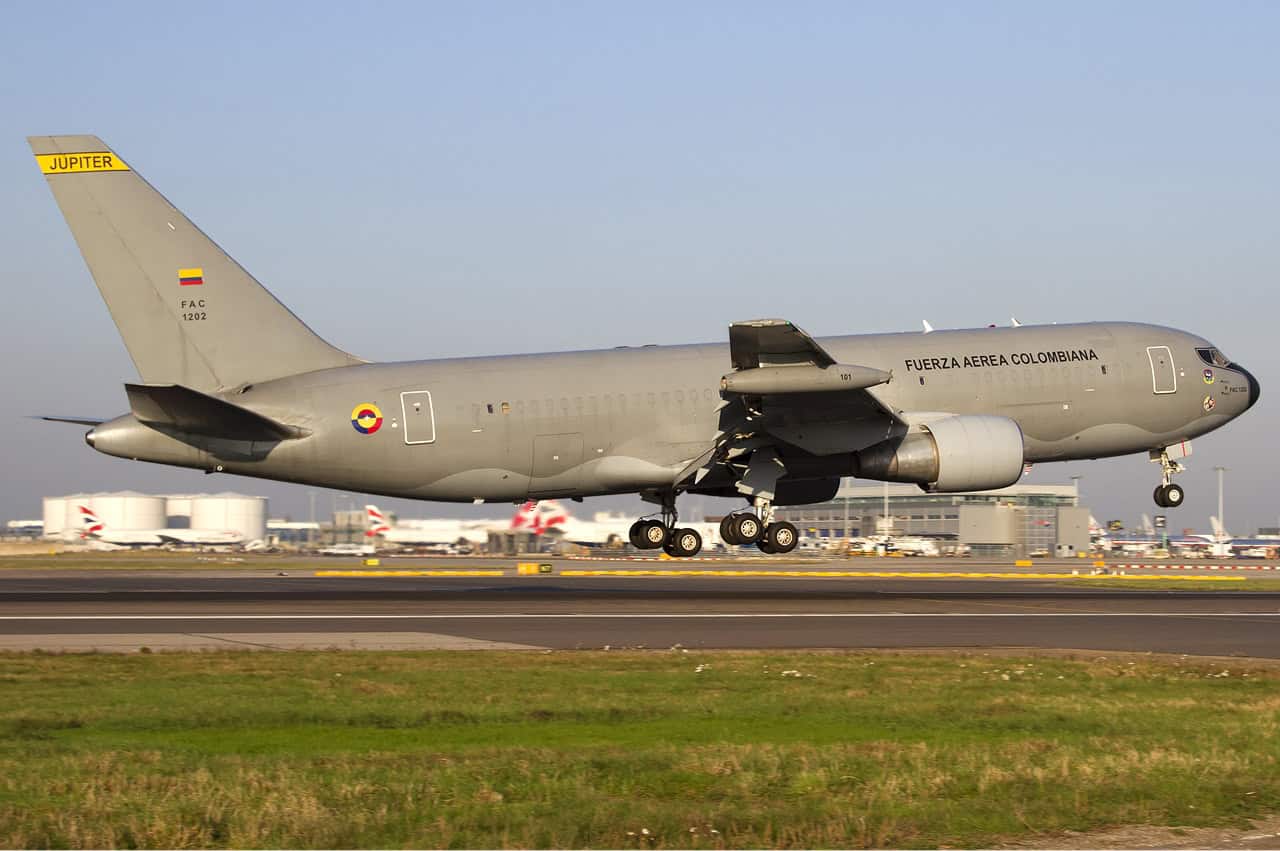
(Photo: Chris Lofting, GFDL 1.2, via Wikimedia Commons)
The aerial refuelling saga tells the same story in miniature and it is worth pausing on because it took twenty years to resolve. India had tried twice to buy Airbus A330 tankers, in 2009 and again in 2013 and watched both tenders collapse over cost. Boeing’s KC-46 came in newer but far more expensive, at roughly 160 million dollars a jet. It carried none of the domestic industrial work Delhi wanted. The solution that finally stuck was cleared by the Defence Acquisition Council in January 2026. Six second-hand Boeing 767s will become tankers, converted through a partnership between Israel Aerospace Industries and Hindustan Aeronautics Limited. The work is worth close to a billion dollars, with deliveries expected from 2030. It is a smaller, cheaper, more patient answer than anything India tried before. It only became possible because IAI had spent decades perfecting this kind of conversion.
Layer in Rafael’s SPICE precision-guidance kits, already flowing onto Su-30MKI and Rafale fighters to sharpen India’s strike accuracy. A pattern becomes hard to miss. Israeli technology is no longer arriving as an add-on bolted to Indian platforms. It is being built into the platforms themselves.
The Part Nobody Wants to Say Out Loud
None of this happened without friction and pretending otherwise would flatter neither government.
Modi’s visit landed amid Israel’s war in Gaza and it drew visible criticism at home. Commentators questioned the optics of deepening ties with a government fighting a conflict that much of the world had condemned. Modi’s own language stayed carefully calibrated. He voiced support for peace efforts and welcomed the American-brokered plan to end the fighting. He declined to say much beyond that, careful not to be read as taking a side. It was a familiar tightrope for Indian foreign policy, courting a valuable partner while avoiding the deeper entanglements of someone else’s war. That balancing act will not get easier as the relationship grows.
A second complication is more mundane and, in the long run, probably more consequential. Every co-production deal India signs still depends on components, licences and expertise that only Israel currently holds. Building an engine assembly line at Nashik or a tanker conversion line at a HAL facility is real progress toward self-reliance. It is not full self-reliance, though and both governments know it. Israel is a small country with a defence-industrial base built for its own scale. It was never sized to arm a nation of a billion and a half people indefinitely. How much of this technology India can eventually absorb, adapt and reproduce on its own remains the open question sitting underneath every ribbon-cutting ceremony.
Where This Road Leads
Strip away the joint statements and the medals and what remains is a relationship that has quietly outgrown its own history.
India and Israel spent three decades as a discreet arms trade dressed up in diplomatic language, useful to both sides and advertised by neither. What changed in 2025 and 2026 was not the warmth, which had always been genuine, but the architecture underneath it. A November memorandum built the framework. A February summit gave it political cover at the highest level. And a string of deals, tankers, missiles, precision munitions, are now busy filling in the details.
The next test will not be another summit. It will be whether the Boeing conversions actually reach the Indian Air Force by 2030 as promised. It will be whether Iron Beam and Arrow move from interest to contract. Above all, it will be whether India’s own industry absorbs enough of this technology to eventually need Israel less rather than more. Two countries that spent decades pretending their friendship was ordinary have finally admitted it is not. What they do with that admission will say more about where India’s defences are headed than any deal signed in Jerusalem.
Image Credits:
Featured image: Prime Minister’s Office, GODL-India
Body image: Chris Lofting, GFDL 1.2, via Wikimedia Commons